Move-Up Owners
Should I sell my Toronto home first or buy first?
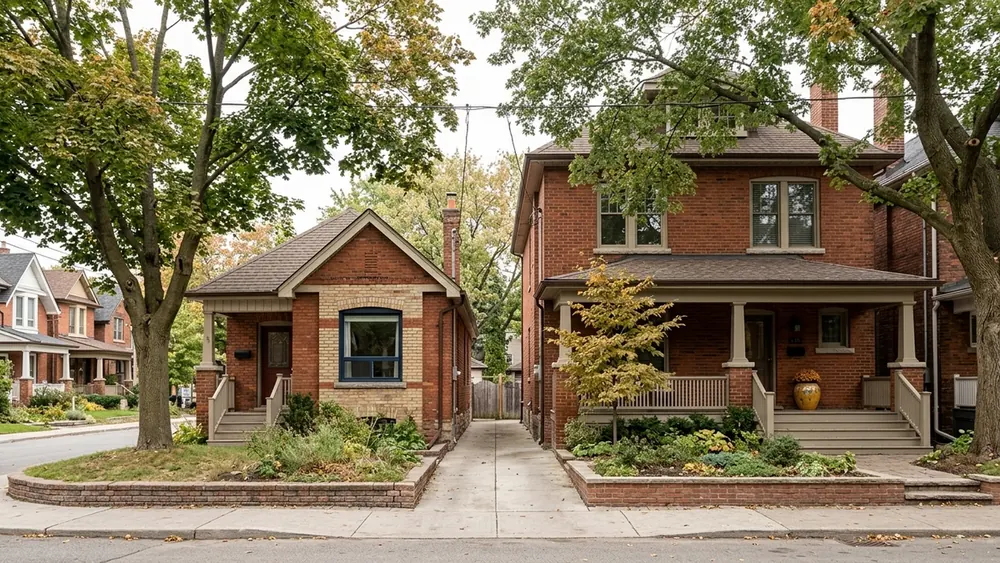
It depends on which risk you would rather carry. Selling first gives you certain numbers but a possible gap in housing. Buying first secures the next home but commits you before your sale is confirmed. Your finances and tolerance for uncertainty decide.
On this page
Choose the risk you can live with
There is no single right order. Selling first and buying first each solve one problem and create another. Selling first gives you certainty about your money but may leave you needing somewhere to live between homes. Buying first secures the next home but commits you before you know what your current home will sell for. The right choice is the one whose risk you can carry comfortably.
That framing helps because it takes the question out of the realm of guessing the market. Many owners in Toronto try to answer it by predicting whether prices will rise or fall over the next few months. Nobody can tell you that reliably. What you can know is your own financial position, your flexibility on timing and how much uncertainty your household can handle. Even professionals who watch the market every day disagree about what comes next.
So instead of asking which order is smarter, ask which problem you would rather solve. Would you rather find a short-term place to live, or would you rather carry two properties for a while? Would you rather know your number for certain, or know the next home is yours? Your honest answers point toward an order before any listing goes up. Write your answers down so you can come back to them.
What selling first gives you and costs you
The main advantage of selling first is certainty. Once your sale is firm, you know what it will leave you after the mortgage payout and selling costs. You shop for the next home with a confirmed budget instead of an estimate. You will not be negotiating while worrying that your own sale might come in lower than planned, and that steadiness often makes the purchase side clearer.
The cost is timing. If your sale closes before you have found and closed on the next home, you need somewhere to live in between. That might mean a short-term rental, staying with family, or storing belongings. Each option has a cost and an inconvenience, and both are easier to manage when you plan for them before you list rather than after an offer arrives. Ask what a short stay would realistically cost you before you decide it is manageable.
You can sometimes reduce that gap by negotiating the closing date on your sale. A longer closing gives you more time to find the next home, though it may affect how buyers see your offer terms. Talk through the closing date you would ask for with your real estate lawyer and with Daniel before you list, so it fits the purchase you are planning. A closing date that suits your plan can matter as much as the price.
What buying first gives you and costs you
The main advantage of buying first is that the next home is secured. If you have found a home that fits what you need, buying first means you do not lose it while you wait for your own sale. For households with a firm move date, such as a new job or a growing family, that security can matter more than anything else on the list.
The cost is exposure. You commit to a purchase price and a closing date before you know exactly what your current home will sell for, or when. If the sale takes longer than you hoped, you may carry two homes at once, with two sets of monthly costs. If it sells for less than you planned, the money you counted on for the purchase shrinks. Both of those outcomes are manageable when you have planned for them, and stressful when you have not.
Buying first is most comfortable when your finances can absorb a slower or smaller sale than expected. That is a question about your own numbers, and a lender is the person who can tell you whether carrying both properties for a while is realistic. Before you write an offer on the next home, know the answer, not just the hope. If the answer is no, selling first is likely the steadier path.
Questions that point you toward one order
A few honest questions usually make the choice clearer than any amount of market reading. Answer them on paper, with everyone in your household involved, before you list or make an offer. If your answers point in different directions, that tells you where the real decision lies and which professional to talk to first. Be honest rather than optimistic.
- Could your household carry two sets of housing costs for a period, if needed
- Is there a fixed date you must move by, or is your timing flexible
- How much of your next purchase depends on the exact price your home sells for
- Would a short-term rental or a stay with family be manageable for you
If you can carry two homes and your move date is fixed, buying first may suit you. If most of your down payment depends on the sale, selling first usually gives you a steadier footing. Most households land somewhere in between, which is why the next step is matching each question to the right person.
Who answers each sequencing question
Sequencing a sale and a purchase involves several professionals, and each one owns a different part of the answer. Sorting the questions ahead of time keeps you from leaning on general advice that may not fit your situation. Here is a simple way to see who should answer what, so every conversation is focused and short. It also shows where two professionals need to talk to each other.
| Question | Why it matters | Who to ask |
|---|---|---|
| Can I carry two homes for a while | It decides whether buying first is realistic | Your lender |
| What will my sale realistically bring | It sets the budget for the next home | Your listing broker, using comparable sales |
| Which closing dates should I ask for | It controls any gap between the two homes | Your real estate lawyer and listing broker |
| What will the purchase cost beyond price | Land transfer tax and fees draw on your equity | Official calculators and your real estate lawyer |
| Does the sale affect my taxes | Your situation may carry tax questions | Your accountant |
Notice that none of these questions is about guessing the market. Each one is about your own position, and each has a person who can answer it with your real figures. Once those answers are in, the order of your moves usually becomes much clearer, and you can decide it before you fall for a listing. Keep the answers together so you can compare them.
Where bridge financing fits in the decision
Some owners line up a sale and a purchase by using short-term bridge financing, which can cover the period between buying the new home and receiving the proceeds of the old one. It can make buying first more manageable when both closings are already firm. It is not something to assume is available, and it has its own costs and conditions. Treat it as one possible tool, not as the plan itself.
Whether bridge financing fits your situation is a lending question, and only a lender can answer it. Ask early, before you write an offer that depends on it. The real estate decision on this side is simpler: if you are relying on bridge financing, plan your closing dates so the gap it needs to cover is as short and as predictable as possible. Ask the lender what happens if one of the closings moves.
Building your own sale and purchase plan
You do not need to decide the order today. You need enough information to decide it calmly when the time comes. Start by writing down the facts that drive the decision, so the conversation with a lender, a lawyer and a broker starts from your situation rather than from headlines about the Toronto market. A calm decision made with real figures beats a rushed one made under pressure.
- Your current mortgage balance and the date your term comes up for renewal
- The latest date you could move, and the earliest you would want to
- A rough price range for your current home and for the next one
- Your fallback housing options if the sale closes before the purchase
Bring that list to a first conversation with Daniel about pricing your current home and sequencing the move. Take the financing questions to your lender and the legal ones to your real estate lawyer. With those answers side by side, the choice between selling first and buying first stops being a guess and becomes a plan.
This article is general information about selling and buying homes in Toronto and Ontario. It is not legal, estate, tax, lending or inspection advice and does not predict prices or rates or promise results. Confirm estate questions with an estate lawyer, taxes with an accountant, land transfer tax with the official Ontario and City of Toronto calculators, financing with a lender, and condo documents with your lawyer. Daniel Warchow, Sotheby’s International Realty Canada.

Written by